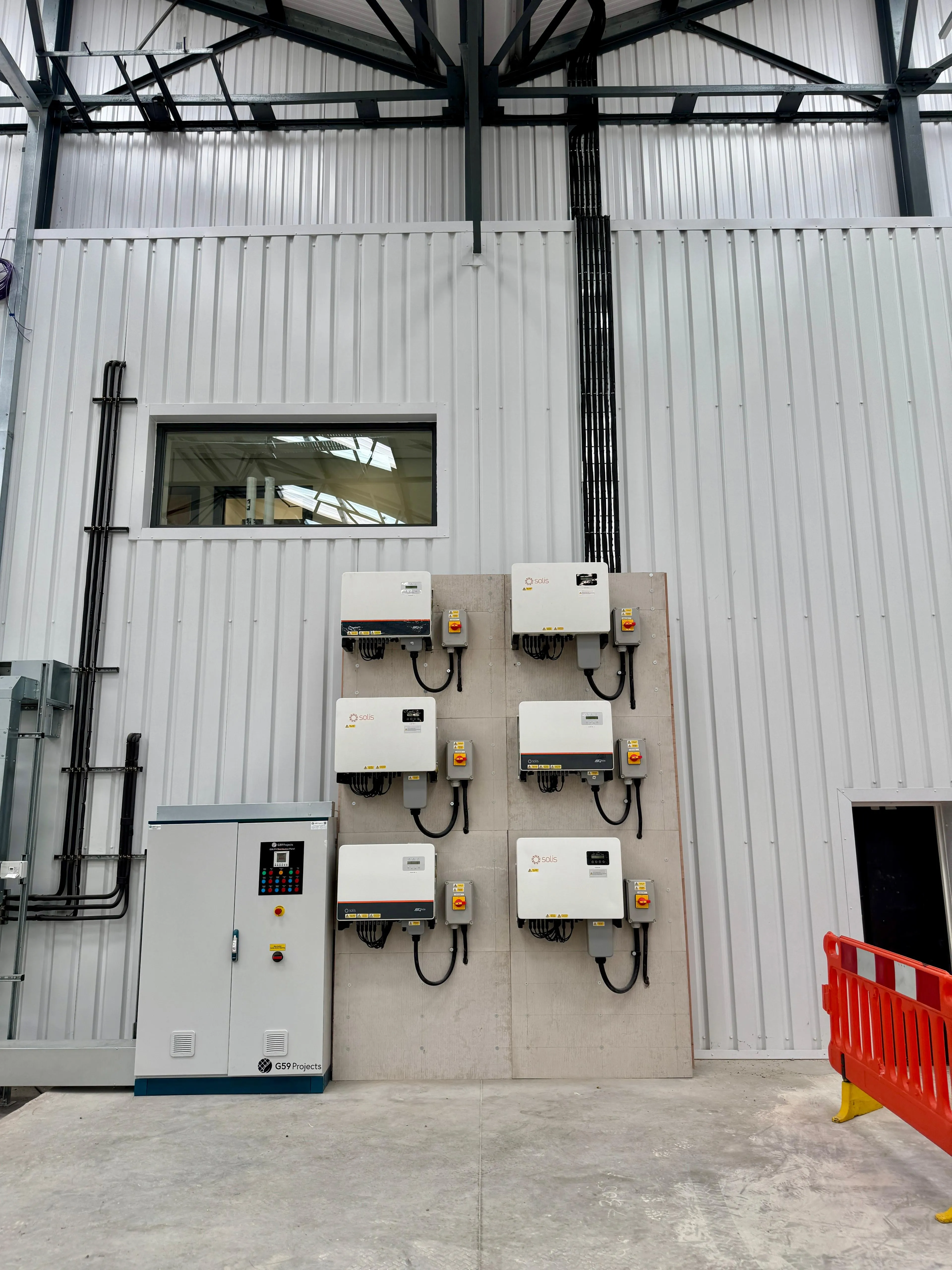
Commercial battery storage
Commercial battery storage
A commercial battery does three jobs at once: it stores cheap or self-generated electricity for use at peak rates, it keeps critical operations running when the grid dips, and it makes an existing solar array work harder by capturing what you would otherwise export. We design, install and maintain scalable systems for commercial and industrial sites across the North East.
- kWh in, £ out
- peak-rate arbitrage
- Bridge
- to backup generation
- Li-ion / flow
- chemistry to suit duty
For industrial & critical sites
- Charge cheap, discharge through peak rates
- Ride through grid dips and outages
- Make existing solar work after dark
Why storage
What does battery storage do for a business?
-
Beat peak pricing
Charge when electricity is cheap, discharge through the expensive windows. On half-hourly tariffs the arbitrage alone can justify the system.
-
Ride through grid problems
Bridge to backup generation, power safe shutdown of sensitive equipment, and protect production from voltage dips.
-
Make solar work after dark
Store daytime generation instead of exporting it cheaply, and run evening shifts on your own power.
-
Scale as you grow
Modular systems sized to your load today with headroom for tomorrow, using lithium-ion or flow chemistry to suit the duty cycle.

The daily trade
How does peak shaving actually pay?
Electricity is cheapest in the small hours and most expensive in the late afternoon and evening. A commercial battery buys low and spends high, every single day: it charges overnight (or from your solar), then powers the site through the priciest window instead of the grid. On half-hourly tariffs that daily spread, multiplied across a year, is the return. Batteries often pair with financed solar: see our funding routes.
Who we install for
Built for sites that can't afford downtime.
- NHS and healthcare buildings
- Government and public sector
- Universities and campuses
- Data centres and airports
- Retail and commercial premises
- Hotels, hospitality and leisure
- Manufacturing, farms and agriculture
- Residential developers
Storage FAQs
Commercial battery questions.
How much does commercial battery storage cost?
System cost tracks capacity and power rating, so it is priced per project. What matters is the payback: on sites with half-hourly tariffs and daytime peaks, peak-shaving plus solar self-consumption commonly delivers returns comparable to the solar array itself. We model it from a year of your consumption data, free.
Do we need solar panels to benefit from a battery?
No. Charging from the grid overnight and discharging through peak windows stands on its own commercially. That said, pairing storage with solar compounds both: the panels fill the battery for free, and the battery stops you exporting at low rates.
Lithium-ion or flow batteries: which do we need?
Lithium-ion suits most commercial duty cycles: compact, efficient and well-proven. Flow batteries earn their place on long-duration, high-cycle applications. We specify chemistry from your load profile rather than a preferred product line.
Can a battery keep us running in a power cut?
Yes, with the right configuration. Batteries can bridge to backup generation, hold critical loads, or power the controlled shutdown that protects equipment and product. Tell us what must never lose power and we design around it.
Who maintains the system?
We do, under the same monitoring and maintenance service that covers our solar installations, with real-time performance visibility and scheduled servicing.
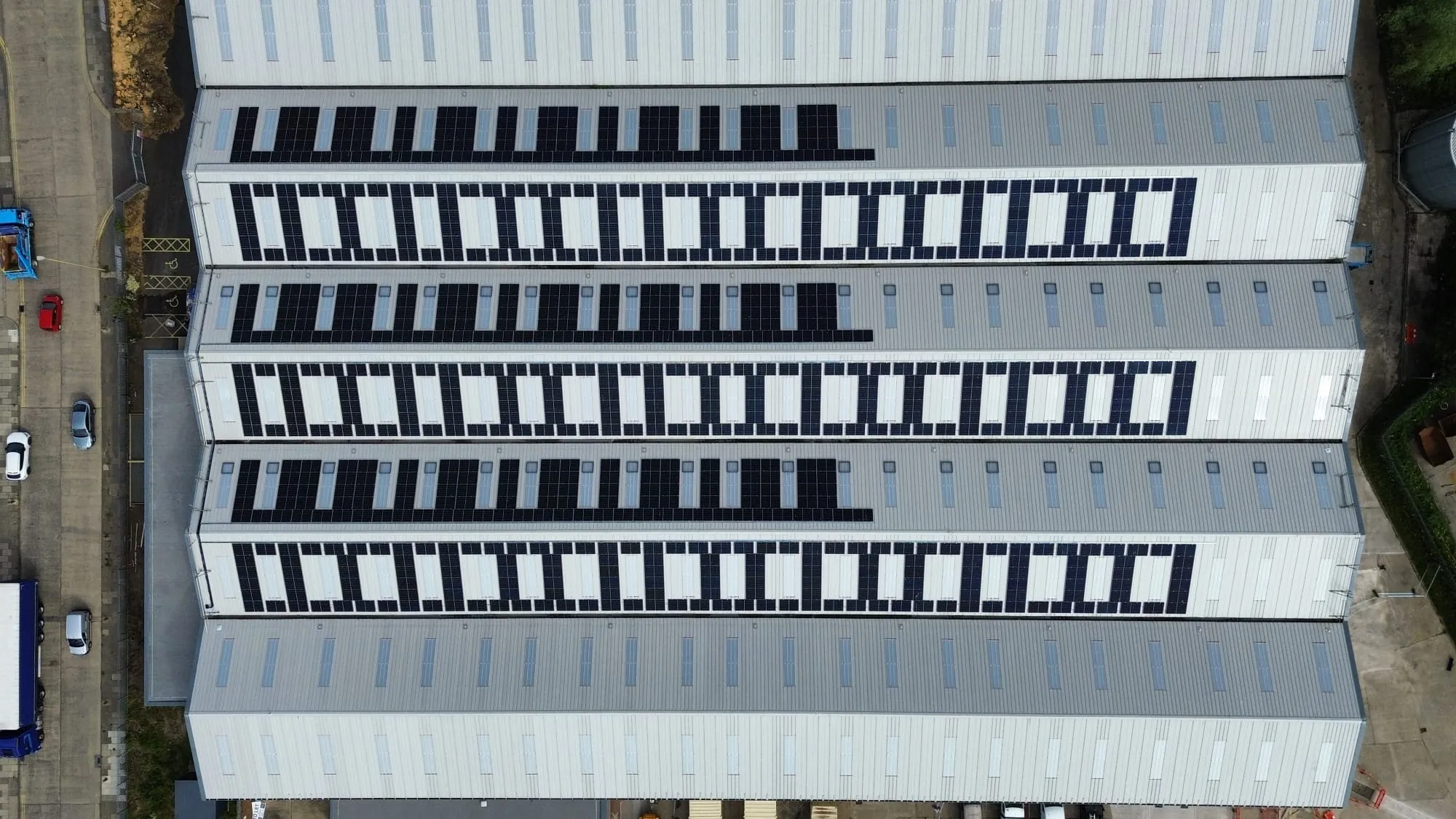
Home battery instead? See home solar & batteries, including battery-only installs. Proof of our commercial work: DHL South Shields and NHS Newcastle. More answers in our FAQ hub. Systems are designed and installed by NAPIT-certified engineers.
Stop paying peak rates for off-peak problems.
Send us your half-hourly data and we'll show you what a battery would have saved last year.