The FAQ hub
Solar questions, answered properly.
Everything we get asked about solar panels, batteries, funding and maintenance, answered by the people who install them. Jump to a topic or scroll the lot.
Solar Basics
Are solar panels worth it in the UK?
Yes, and the maths has rarely been better. Panels convert daylight (not heat) into electricity that replaces what you would buy at retail rates, commercial systems typically pay back in 4 to 7 years, and homes gain further from 0% VAT until March 2027 plus battery savings on smart tariffs. The honest caveat: a heavily shaded roof or a site that uses almost no daytime power weakens the case, which is why we survey before we quote and tell you straight if solar does not stack up.
How much do solar panels cost?
A typical home solar and battery system costs £7,000 to £14,000 installed, currently VAT-free. Commercial systems are priced per project by size and complexity; as scale rises the cost per kWp falls, which is why large roofs pay back fastest. Funding routes from asset finance to Power Purchase Agreements can reduce the upfront cost to zero.
How many solar panels do I need?
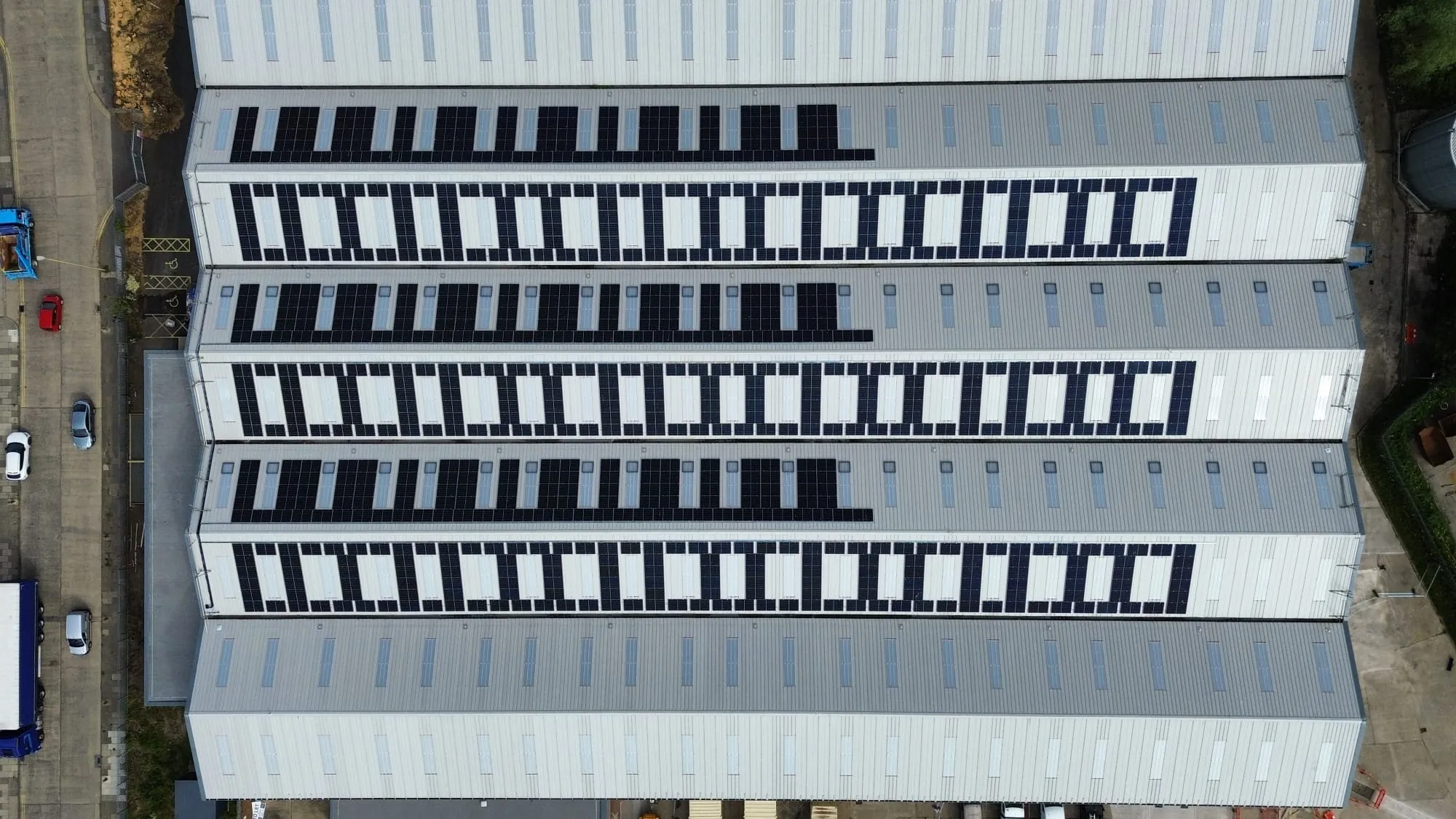
A typical home installs 10 to 16 panels (4 to 7 kWp); commercial systems run from dozens to hundreds, like the 804 panels we fitted for DHL in South Shields. The right number comes from your electricity usage, roof space and orientation, not a template. We size every system from your actual consumption data.
How long do solar panels last?
Panels are typically warrantied for 25 years of performance and often produce well beyond that, losing only a fraction of a percent of output per year. Inverters usually need replacing once, around year 12 to 15. Systems we installed in 2015 are still generating on our maintenance books today.
Do solar panels work on cloudy days?
Yes. Panels generate from daylight, so they produce on overcast days, just at reduced output. Across a year the North East receives more than enough daylight for solar to pay, and pairing panels with a battery smooths the difference between bright and grey days.
Do I need planning permission for solar panels?
Usually not for rooftop systems: most domestic and commercial installations are permitted development, with exceptions for listed buildings and some conservation areas. Ground-mounted arrays and carports generally do need permission. We check and handle the paperwork on every project.
What happens during a solar panel installation?
After a survey and design, a domestic installation typically takes one to two days: scaffolding, mounting rails, panels, inverter and connection, then testing and handover with your monitoring app set up. Commercial projects add structural checks and a G99 grid application, which we manage, and are phased so your operations continue as normal.
Who installs the panels, and are you certified?
Yes: our own NAPIT and MCS certified team designs, installs and maintains every system. We do not subcontract the roof work. Certification matters beyond the badge: it is what makes your installation eligible for export payments and satisfies insurers and funders. We also hold CHAS for public-sector tenders and are RECC members for domestic contracts.
Commercial Solar
How much do commercial solar panels cost?
Every system is priced per project because roof size, structure and energy use vary so much. As a guide, a mid-size commercial installation runs from tens of thousands of pounds, and our funding routes (asset finance and Power Purchase Agreements) can take the upfront cost to zero. Every quote is free, surveyed and itemised, with up-front pricing and no hidden fees.
How long does a commercial solar installation take?
Most rooftop installations take days rather than weeks once on site. A system the size of the 366 kWp array we installed for DHL's South Shields warehouse (804 panels) was delivered with the building in normal use throughout. We plan the work around your operations so day-to-day business is not affected.
How quickly do commercial solar panels pay for themselves?
A typical commercial system in the North East pays back in 4 to 7 years, driven by how much of the generated power you use on site and your current tariff. Panels are warrantied for decades, so everything after payback is savings. We model your payback from your actual half-hourly consumption data before you commit.
Do commercial solar panels need planning permission?
Usually not for rooftop systems. Most rooftop commercial systems fall under permitted development and need no planning application, though exceptions apply for listed buildings and some conservation areas. Ground-mounted arrays usually do need permission. We handle the checks, the paperwork and the G99 grid application as part of every project.
What happens to power we generate but don't use?
It can be exported to the grid for payment, or stored in a commercial battery so you use it after dark instead of buying peak-rate electricity. Many of our clients add battery storage for exactly this reason, and we design systems so storage can be added later without rework.
Will solar panels work on our roof?
Yes, on most commercial roofs. We install on trapezoidal metal, flat and pitched roofs, and build ground-mounted arrays where roof space is short. The free site survey checks structure, orientation and shading before anything is quoted, so you will know exactly what your building can generate.
Are you certified to install commercial solar?
Yes. Green Team Partnership is NAPIT, MCS and CHAS certified, and a RECC member. We have been appointed through competitive public-sector tenders by Newcastle City Council, Durham County Council, South Tyneside Council and the NHS. Certified installation is also what your insurer, funder and district network operator will ask for.
What warranty do we get?
A 24-month workmanship warranty on parts and labour comes with every installation, alongside the manufacturers' product and performance warranties on panels and inverters, which typically run 12 to 25 years. We also offer ongoing monitoring and maintenance so issues are caught before they cost you generation.
Funding & Grants
Are there government grants for solar panels?
There is no universal government grant that pays for solar panels outright in England. What exists instead is a set of genuinely valuable incentives: 0% VAT on home solar and battery installations until March 2027, Smart Export Guarantee payments for electricity you export, tax reliefs for businesses through capital allowances, and a business rates exemption for onsite renewable generation. Schemes like ECO4 help specific low-income households. Anyone promising 'free government solar panels' for a typical home or business is not telling the whole story.
Can we get solar panels with no upfront cost?
Yes, two ways. A Power Purchase Agreement puts a system on your roof at no capital cost: we install, own and maintain it, and you buy the power it produces at a rate below your grid tariff. Asset finance spreads the cost of a system you own, with repayments typically covered in whole or part by the energy savings. Which suits you depends on whether you want ownership on your balance sheet.
How does a solar PPA work?
We design, install, operate and maintain the solar system on your building at no upfront cost. You pay only for the electricity it generates, at a rate lower than your grid supplier and locked in for the contract term, which protects you from market spikes. At the end of the term you can extend, buy the system outright, or have it removed.
What is asset finance for solar panels?
A loan secured against the solar installation itself, so your existing credit lines and cash flow stay free for the business. You own the system from day one, claim the tax benefits, and structure repayments so the energy savings do the heavy lifting. Finance is subject to status and provided through third-party lenders.
What tax relief do businesses get on solar?
Solar panels qualify for a 50% first-year capital allowance, so half the cost can be set against taxable profits in year one, with the remainder written down after that. Eligible onsite renewable plant, including solar, is also exempt from business rates until 2035. Your accountant can confirm how these apply to your structure; we provide the itemised costs they need.
What is the Smart Export Guarantee?
The Smart Export Guarantee (SEG) requires larger energy suppliers to pay you for renewable electricity you export to the grid. Rates vary by supplier and change over time, so it pays to compare. For most systems we design, using your own power on site is worth more than exporting it, and a battery shifts that balance further in your favour.
Is the 0% VAT on solar ending?
The zero rate of VAT on energy-saving materials, including solar panels and battery storage installed in homes, currently runs until 31 March 2027, after which it is due to revert to 5%. On a typical domestic system that is a saving worth acting on while the window is open. Commercial installations are standard-rated, but VAT-registered businesses reclaim it as normal.
Which funding route is right for us?
As a rule of thumb: choose outright purchase if you have the capital and want maximum lifetime return, asset finance if you want ownership and tax benefits without the capital outlay, and a PPA if you want the lowest-risk route with maintenance included and no debt on the balance sheet. We will model all three against your actual consumption before you decide.
Home Solar & Batteries
How does charging a battery overnight save money?
Smart tariffs sell electricity cheaply overnight, often at a quarter of the peak rate. Your battery fills up in the small hours, then runs the house through the expensive daytime and evening windows. Because this works regardless of sunshine, the saving continues all year round, even in December when the panels are quiet.
How much does a home solar and battery system cost?
Most installations fall between £7,000 and £14,000 depending on panel count and battery size, and home installations carry 0% VAT until March 2027. Battery-only installs for homes that already have panels, or just want cheap overnight charging, start well below that. Every quote is free, surveyed and itemised.
Do solar panels work in winter in the North East?
Panels generate from daylight rather than heat, so they produce in winter, just less of it. This is exactly why we design most home systems around a battery: overnight smart-tariff charging keeps cutting your bills through the darkest months, and the panels take over as the days lengthen.
Can I get a battery without solar panels?
Yes. A battery-only installation lets you buy cheap overnight electricity and use it at peak times, which stacks up well for many homes even before panels enter the picture. It also carries 0% VAT until March 2027, and panels can be added later without rework.
Will I get paid for electricity I export?
Yes, under the Smart Export Guarantee your energy supplier pays for what you export. Rates vary a lot between suppliers, so it pays to choose carefully. That said, using your own power, especially via a battery, is usually worth more per unit than exporting it.
How many solar panels does my house need?
A typical home installs 10 to 16 panels, but the right number depends on your roof space, orientation and how much electricity you use. We size systems from your actual usage rather than a one-size template, and the free survey confirms what your roof can take.
Do I need planning permission for home solar?
Usually not. Domestic rooftop solar is normally permitted development, with exceptions for listed buildings and some conservation areas. We check this for you before anything is ordered.
Is my home suitable for solar panels?
Yes, if the roof faces south, east or west. South, east or west-facing roofs all work, and modern panels perform well even with some shading. The free survey looks at orientation, pitch, shading and your consumption pattern, and we will tell you honestly if solar does not stack up for your property.
What is the best tariff for solar and battery in the UK?
The best tariffs for solar-and-battery homes pair a cheap overnight window for charging with a decent export rate, and several suppliers now offer tariffs designed exactly for this. The right one depends on your battery size and usage pattern; we set up every installation with a tariff recommendation and show you the maths behind it.
Do solar panels add value to your house?
Yes. An installed, owned solar-and-battery system lowers running costs and improves the EPC rating, both of which buyers and mortgage lenders look at. The effect is strongest when the system is owned outright rather than leased, which is how we install.
Certifications
Why do councils ask for CHAS?
CHAS is an SSIP health and safety scheme. Local authorities and main contractors use it at pre-qualification so they do not have to audit every bidder's health and safety file from scratch. We already sit on the SSIP portal, so the risk assessments, method statements and insurance documents that come with a tender are routine, not a scramble.
Do we need an MCS-certified installer?
Yes, if you want Smart Export Guarantee payments on systems up to 50 kW: suppliers will not register a non-MCS install. Insurers, lenders and many grant schemes ask for it as well. Larger commercial arrays sit outside that microgeneration band; we still design and install those to the same standard, and MCS still matters on any roof that does fall under 50 kW, including school and housing stock.
What does NAPIT cover that MCS does not?
MCS audits the renewable design and the products. NAPIT is the Competent Person Scheme for the electrical work and Building Regulations notification. That is the difference between a pretty certificate and a Building Regulations Compliance Certificate that the local authority has actually been told about.
Does RECC apply to commercial contracts?
No. RECC is a domestic consumer code approved by the Chartered Trading Standards Institute. It governs how we quote, take deposits and handle complaints for homeowners. A B2B contract sits outside it. Housing officers and landlords still get the benefit: the same company quoting tenant roofs is already held to that code.
How do I check a solar installer is MCS certified?
Search the installer directory at mcscertified.com; every certified business is listed there by name and postcode. You can verify Green Team Partnership the same way. NAPIT membership can be checked on the NAPIT website, and CHAS status on the SSIP portal. A genuine installer will never mind you checking.
Can you supply a tender pack?
Yes. CHAS status, risk assessments and method statements (RAMS), insurance documents and named public-sector references are part of how we work, not an extra. We have been appointed by Newcastle City Council, Durham County Council, South Tyneside Council and the NHS through competitive tender.
Question not covered? Call us on 03333 447 456 or dig into the detail on commercial solar, home solar & batteries, funding and certifications.
Prefer answers about your actual roof?
A free survey answers every question with numbers instead of generalities.